Drone photography for hotels and villas in Costa Brava
What makes aerial footage actually sell a property — and why the cheapest drone quote is usually the most expensive mistake.
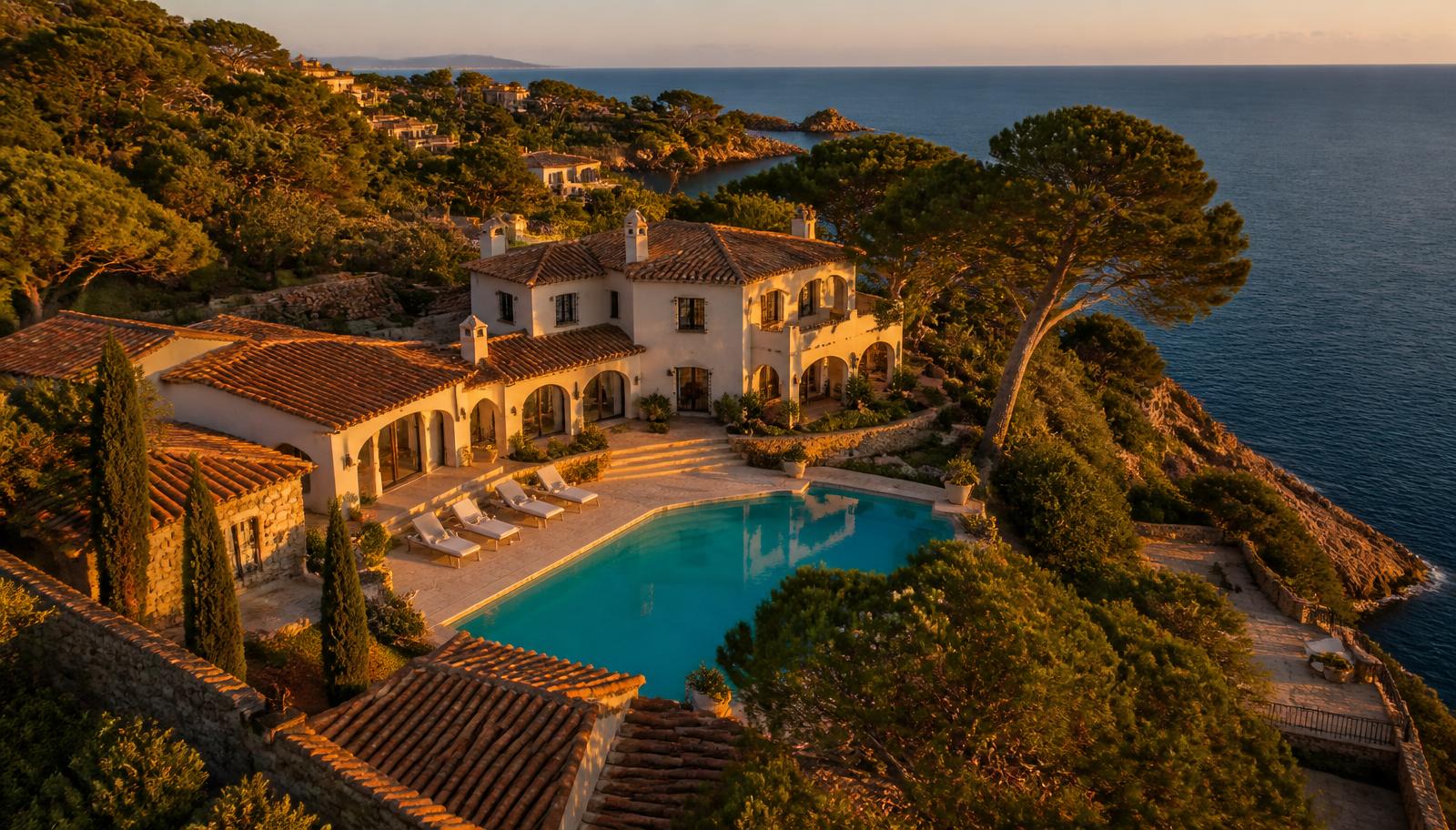
Aerial footage has become the first thing a guest sees when they decide whether a Costa Brava property is worth booking. In a feed of fifty villas, the one that opens with a slow drone pull-back over the Mediterranean usually wins the click.
This is not about novelty. Drone photography for hotels and villas has matured into a specific craft with its own rules, restrictions, and return on investment. Over the last three years we have shot coastal properties from Cadaqués to Blanes — here is what actually moves the needle.
Start with the story, not the shot.
The most common mistake is treating a drone as a way to get everything in. A 360° orbit at 80 metres tells the viewer almost nothing. The useful drone shots are the ones that answer a guest's question: How close is the sea? Is the pool private? What does the terrace feel like at sunset? Does the property sit inside a landscape or on top of a neighbour?
We plan drone sequences the way a film would plan an establishing shot. One opening reveal from the water. One low pass through the garden. One vertical descent from the terrace to the pool. Anything beyond that is usually editing-room material.
Know the airspace before you brief the shot.
Most of the Costa Brava coast is restricted or controlled airspace under AESA, Spain's aviation authority. Flying a consumer drone over a beach, a natural park, or a town without the correct operational authorisation is illegal, and the footage cannot be used commercially even if it looks good.
A professional real estate photography service should include an AESA-certified operator with public liability insurance and the right to fly in the specific location. Ask for the licence number and the flight plan in writing. If the answer is vague, the footage is a liability.
Light matters more at altitude.
Drone cameras have smaller sensors than ground cameras and less dynamic range. Harsh midday sun flattens terraces and turns pools into mirrors of pure white. The best coastal drone work happens in the first and last hour of daylight, when shadows give the landscape shape and the water keeps its colour.
For east-facing properties, sunrise is often the hero. For west-facing villas around Begur and Palafrugell, late afternoon gives the Empordà hills their depth. We schedule drone work separately from interior work because the window is so narrow.
Match the edit to the platform.
A 90-second cinematic reel belongs on a property website or a direct-bookings page. Social cuts need to be 15–30 seconds, vertical, and front-loaded. Portal galleries still need static aerial stills — a good drone operator delivers both the motion and the frozen frame.
If you are building a website for direct bookings, the drone footage should sit above the fold but not autoplay with sound. Guests want the option to press play; they do not want to be interrupted.
Linking it back to the property.
The best drone work we have done recently is for Port Marina Palamós — a coastal property where the brief was simple: show that the sea is the garden. The same approach is built into our video and drone photography work.
If you are preparing a villa or boutique hotel for the 2026 season, August is the right moment to plan the shoot. The light is predictable, the gardens are full, and the material will be ready before guests start booking for spring.
Related reading: Costa Brava real estate market guide and our Port Marina Palamós project.
Related reading: Hotel PMS and channel manager comparison: Mews, Lodgify, Avantio, Guesty and more
Read next
- Renting out a property on the Costa Brava: what changed, and what you must have in placeNo new tourist licence can be granted anywhere on this coast, and existing licences expire in November 2028. A sourced briefing on the rules, taxes and town-by-town position for owners in Girona and the Empordà.
- Hotel PMS and channel manager comparison: Mews, Lodgify, Avantio, Guesty and moreAn honest side-by-side of the property management systems and channel managers we integrate with — Mews, Lodgify, Avantio, Guesty, Smoobu, Hostaway, Hospitable — for boutique hotels, villas, and property management companies on the Costa Brava.
- Seasonal rental on the Costa Brava: what Catalonia's 2026 law changedSince 1 January 2026 a Catalan letting that meets a housing need is a residential tenancy, whatever its length. What that means for owners in Girona and the Empordà.